
…aaaaaaaaaaaaaaaaand we’re back!
It is quite fitting to talk about the Arsenal Women’s somewhat tribulated, troubled new season during a tribulated, troubled personal time, so let’s get to it right away and try to understand how and why things went bad so early for Renée Slegers’ team during what was expected to be a breakout season.
Having finished second in the WSL and having reached the UWCL semifinals in consecutive years, Arsenal Women invested heavily in the market to build the depth in every area of the squad – especially upfront where the team looked short on options and game-changers. Among eight new faces in came Lisa Baum, Selina Cerci and Geraldine Reuteler, three players able to bring unpredictability, goal threat and flair to a team that often rather than sooner looked slow-paced, short of ideas and void of imagination.
Looking back at how the previous WSL campaign unfolded, it is easy to understand that drawing six times in the league was the big difference between winning the trophy or finishing second. Some of those draws should have been wins really, had Arsenal Women had more firepower and more natural goalscorers in their ranks. On paper, investing heavily in the attacking areas made sense and while the profiles brought in by the club weren’t really top-shelf, the potential was immense.

Photo courtesy of Arsenal.com
Seven games into the WSL league, Arsenal Women are seventh in the table and scored only seven times.
For comparison, Chelsea and Manchester City scored twenty and nineteen goals, respectively; more worryingly, second-bottom Crystal Palace scored six times, and all but three clubs in the bottom-half of the table scored more than the Gunners.
Arsenal Women scored only once in the two games against Crystal Palace and Birmingham City, two teams that conceded twenty-eight goals, combined; against HB Køge, in the UWCL, they needed a last-minute penalty to overcome the hosts and kick-start their European campaign after a very disappointing draw against Paris FC, having squandered a two-goals lead in less than thirty minutes.
Yet, Renée Slegers can count on Alessia Russo, Stina Blackstenius, Caitlin Foord, Chloe Kelly, Olivia Smith, Alessia Cerci, Lisa Baum, Frida Maanum, Geraldine Fraueler, Mariona Caldentey and soon Michelle Agyemang.
Why is it so hard to create and convert chances?
For those of you who follow the Arsenal Women closely, the answer is outrageously clear and equally raging: this team cannot beat a low block.
To some of you, this will sound like a broken record because the Arsenal Women team struggled to overcome the most basic hurdle for quite some time, yet the head coach and her staff are yet to find a solution.
Adding quality, unpredictability and flair looked like a good idea but that’s clearly not enough to beat the likes of Crystal Palace and Birmingham City, because the team cannot move the ball quickly enough and movement is atrociously slow and predictable.
In my humble opinion, there is more to it than tactical acumen, quality of the players or systems to the team’s struggles. For all the great players that the team brought in, we cannot turn a blind eye to the fact that this team and their dressing room lost a huge chunk of experience, personality and winning mentality through Katie McCabe and Beth Mead exits.
Perhaps the lack of urgency and desire stems from a lack of hunger, conscious or not, that the current leadership group failed to acknowledge.
Leadership skills are not lacking at the club, with Leah Williamson, Steph Catley and Lotte Wubben-Moy more than capable of setting the standards and keeping everyone on their toes, but there is a distinct lack of aggressiveness in this team. There are a lot of technical leaders in the current group, but are there enough people leaders in the dressing room?
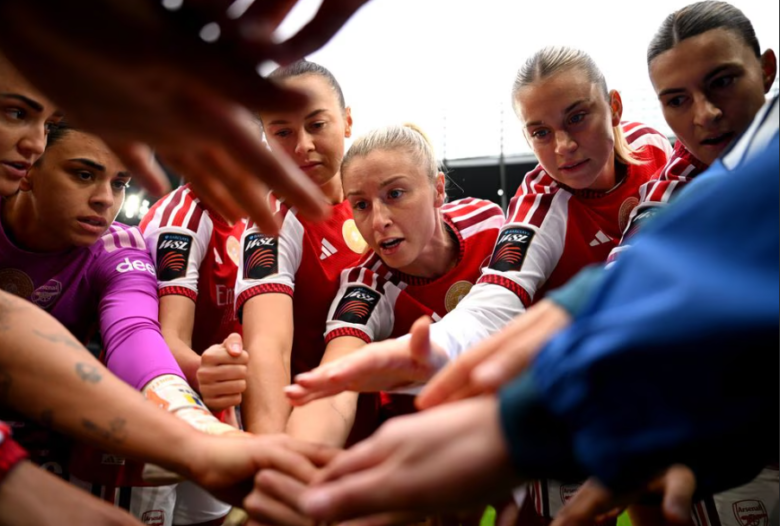
Photo courtesy of Arsenal.com
Renée Slegers is trying to build a different sort of leadership group, perhaps equally vocal but surely different in style compared to the previous regime, and letting go two big personalities like Beth Mead and Katie McCabe was a necessary sacrifice to ensure the transition, but I cannot help thinking that this team is becoming way too nice – if such a thing still exists.
This group reminds me of the men’s team during the final years of Arsène Wenger reign, when the group was composed of skilful, diminutive players who failed to cope with the physicality and aggressiveness of other teams. That team progressively accepted their status of “nice guys” to a point where they were perhaps too nice, and were taken advantage of. If you compare that team with the current men’s team, you see that Mikel Arteta built a leadership group that blends different personalities, going from the elegant, technically gifted Martin Ødegaard to the combative, energetic Declan Rice. The men’s team is successful because everything starts with a sacred fire in the belly, a willingness to compete, a real urgency that help building a platform for any tactical setup or formation.
What I see in the Arsenal Women team is a lack of urgency, a lack of fire, a lack of aggressiveness that make everything else absolutely irrelevant. There’s no system or tactical switch potent enough to fight off apathy.
Hopefully winning the North London Derby will shake things off and liberate the team, wash off the apathy, lack of urgency and passiveness. Hopefully the players will absorb some of the good vibes and energy that emanated from a hard-fought win at the Tottenham Hotspur Stadium. Hopefully this will be a new dawn for Renée Slegers and the team, who are in desperate need of some good results and good performances.
A win is a win, but that’s not enough to turn the page, for good. Winning the North London Derby was important, but it’s only a band-aid over a deep, dark malaise.
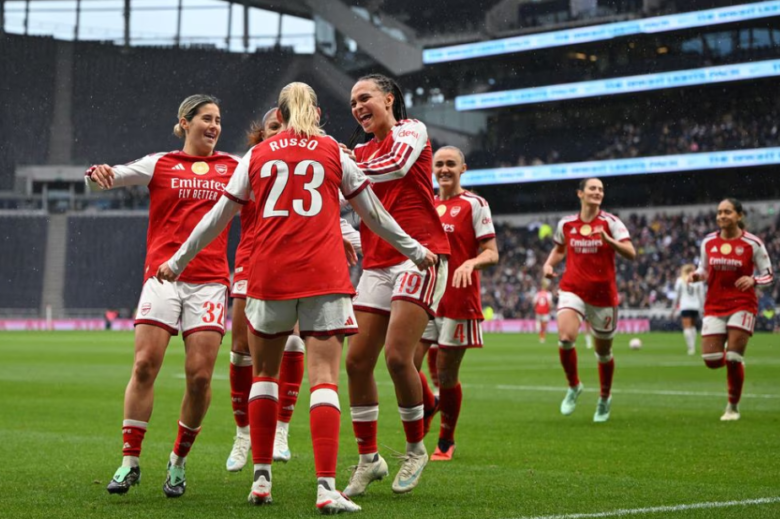
Photo courtesy of Arsenal.com
The next three games will be vital to understand where this team goes: anything but three wins against Benfica, West Ham and Liverpool could be the beginning of the end for Renée Slegers and some players. It’s a daunting vision because this team is clearly lacking self-confidence and even the easiest games aren’t necessarily guaranteed wins, but I believe these players have that inside themselves and they only need some luck to build momentum and belief.
More than luck, though, they need someone within the dressing room who can light the fire in their bellies.

Italian living in Switzerland, Gooner since mid-nineties, when the Gunners defeated my hometown team, in Copenhagen. I started my own blog and podcast (www.clockenditalia.com) after after some experiences with Italian websites and football magazines. Covering Arsenal Women with the occasional rant about the boys.
No comments yet.